Pages

Showing posts with label MINUMAN. Show all posts

Monday, 12 March 2012

F&N

Latar Belakang Syarikat


Sejarah Fraser & Neave

Syarikat Singapura dan selat air berkabonat telah ditubuhkan pada tahun 1883 oleh John Fraser dan David Chalmers Neave, yang dipelbagaikan daripada perniagaan percetakan mereka (Percetakan Pejabat Singapura dan Selat ) . Syarikat ini menjadi perintis perniagaan air berkabonat di Asia Tenggara pada tahun 1883. Pada tahun 1898, sebuah syarikat awam yang baru ditubuhkan dan kedua-dua perniagaan yang dijual kepada syarikat baru, yang dinamakan Fraser & Neave (F & N), $ 290.000 dalam bentuk wang tunai dan saham.


>>>>>>>>>>>>>>>>>>>>>>>>>>>>>>>>   Read More

Sunday, 11 March 2012

Pepsi

Pepsi has been bringing fun and refreshment to consumers for over 100 years. Learn more about our flagship brand and the broad spectrum of beverages it offers worldwide.


Pepsi-Cola North America is the refreshment beverage unit of PepsiCo, Inc., in the United States and Canada. Its U.S. brands include Pepsi, Mountain Dew, Sierra Mist, SoBe, AMP Energy, IZZE, Naked Juice, Propel, Mug, and Aquafina, among others. The company also makes and markets North America's best-selling ready-to-drink iced teas and coffees, respectively, via joint ventures with Lipton and Starbucks. From its humble beginnings over a century ago, Pepsi-Cola has grown to become one of the best-known, most-loved products throughout the world. Today, the company continues to innovate, creating new products, new flavors and new packages in varying shapes and sizes to meet the growing demand for convenience and healthier choices. Pepsi is constantly on the lookout for ways to ensure their consumers get the products they want, when they want them and where they want them.

Photo of Entrepreneur

Caleb  Bradham


Entrepreneur Background

Caleb Davis Bradham (May 27, 1867 – February 19, 1934) invented the soft drink Pepsi-Cola. He was a pharmacist, born in Chinquapin, Duplin County, North Carolina, May 27, 1867. He graduated from the University of North Carolina at Chapel Hill and attended the University of Maryland School of Medicine.
Circa 1890, he dropped out of the University of Maryland School of Medicine, owing to his father's business going bankrupt. After returning to North Carolina, he was a public school teacher for about a year, and soon thereafter opened a drug store in New Bern named the "Bradham Drug Company" that, like many other drug stores of the time, also housed a soda fountain.
This drug store, located on the corner of Middle Street and Pollock Street in downtown New Bern, is where Bradham, on August 28, 1898, invented the recipe—a blend of kola nut extract, vanilla, and "rare oils" -- for what was initially known as "Brad's Drink," but that soon was renamed Pepsi-Cola. Bradham named his drink after a combination of the terms “pepsin” and “cola,” as he believed that his drink aided digestion much like the pepsin enzyme does, even though it was not used as an ingredient. His assistant James Henry King was the first to taste the new drink.
On December 24, 1902, the Pepsi-Cola Company was incorporated in North Carolina, with Bradham as the president, and on June 16, 1903 the first Pepsi-Cola trademark was registered. Also in 1903, he moved his Pepsi-Cola production out of his drug store and into a rented building nearby. In 1905, Bradham began selling Pepsi-Cola in six-ounce bottles (up until this time he sold Pepsi-Cola as a syrup only), and awarded two franchises to North Carolina bottlers.
On January 1, 1901, Bradham married Charity Credle in New Bern, North Carolina.
Bradham was elected steward of St. John's (Masons') Lodge No. 3 in 1895[citation needed]; he was later elected or appointed junior warden in 1898, senior warden in 1899, and Worshipful Master in 1900, 1901, and again in 1927.[citation needed] By the time of his death, Bradham had attained the 32nd degree of Scottish Rite, acted as grand commander in the York Rite, served as provincial grand master of the Order of Colonial Masters of North America, recorder and treasurer of the Sudan Shrine Temple, eminent commander of St. John's Commandery, and master kadosh of Carolina Consistory No. 3.[1] He also served as an exalted ruler of the New Bern Elks Lodge.[citation needed]
In addition to running his drug store, he served as the president of the People’s Bank of New Bern, and was a chairman of the Craven County Board of Commissioners. At one point he was even suggested as a candidate for governor of North Carolina. He also served as an officer in the naval reserve for 25 years; he was named a lieutenant in the North Carolina Naval Militia, was promoted to commander in 1904, and to captain in 1913. He retired as a rear admiral. Additionally, in 1914 he was appointed by Secretary of the Navy Josephus Daniels to the General Naval Militia Board.[2]
At the peak of success, Bradham had authorized Pepsi-Cola franchises in over 24 states; however, on May 31, 1923, Bradham and his Pepsi-Cola Company declared bankruptcy. The major factor for Bradham’s business failure was the price of sugar immediately following World War I, when prices went up to 28 cents per pound (it was three cents per pound pre-war), and Bradham had purchased a large amount of sugar at that price but the price of sugar nosedived soon after he purchased it. The assets of his company were sold to the Craven Holding Company for $35,000. After declaring bankruptcy, Bradham returned to operating his drug store.
Bradham died on February 19, 1934, after succumbing to a long-term illness. His funeral was held at New Bern's First Presbyterian Church, of which Bradham was a member. He is buried in Cedar Grove Cemetery in New Bern; Masonic rites were administered at his graveside, and the pallbearers were from his Masonic lodge.
Nicholas Sparks, a fiction author who lives in New Bern, mentioned Mr. Bradham in his book Bend in the Road.
 

History

Pepsi (stylized in lowercase as pepsi, formerly stylized in uppercase as PEPSI) is a carbonated soft drink that is produced and manufactured by PepsiCo. Created and developed in 1898 and introduced as "Brad's Drink", it was later renamed as Pepsi-Cola on June 16, 1903, then to Pepsi in 1961.
Pepsi was first introduced as "Brad's Drink" in New Bern, North Carolina, United States, in 1898 by Caleb Bradham, who made it at his home where the drink was sold. It was later labeled Pepsi Cola, named after the digestive enzyme pepsin and kola nuts used in the recipe.[2] Bradham sought to create a fountain drink that was delicious and would aid in digestion and boost energy.[3]
In 1903, Bradham moved the bottling of Pepsi-Cola from his drugstore to a rented warehouse. That year, Bradham sold 7,968 gallons of syrup. The next year, Pepsi was sold in six-ounce bottles, and sales increased to 19,848 gallons. In 1909, automobile race pioneer Barney Oldfield was the first celebrity to endorse Pepsi-Cola, describing it as "A bully drink...refreshing, invigorating, a fine bracer before a race." The advertising theme "Delicious and Healthful" was then used over the next two decades.[4] In 1926, Pepsi received its first logo redesign since the original design of 1905. In 1929, the logo was changed again.
In 1931, at the depth of the Great Depression, the Pepsi-Cola Company entered bankruptcy - in large part due to financial losses incurred by speculating on wildly fluctuating sugar prices as a result of World War I. Assets were sold and Roy C. Megargel bought the Pepsi trademark.[5] Eight years later, the company went bankrupt again. Pepsi's assets were then purchased by Charles Guth, the President of Loft Inc. Loft was a candy manufacturer with retail stores that contained soda fountains. He sought to replace Coca-Cola at his stores' fountains after Coke refused to give him a discount on syrup. Guth then had Loft's chemists reformulate the Pepsi-Cola syrup formula.
On three separate occasions between 1922 and 1933, the Coca-Cola Company was offered the opportunity to purchase the Pepsi-Cola company, and it declined on each occasion.


Trademark

The original trademark application for Pepsi-Cola was filed on September 23, 1902 with registration approved on June 16, 1903. In the application's statement, Caleb Bradham describes the trademark as an, "arbitrary hyphenated word "PEPSI-COLA," and indicated that the mark was in continuous use for his business since August 1, 1901. The Pepsi-Cola's description is a flavoring-syrup for soda water. The trademark expired on April 15, 1994.
A second Pepsi-Cola trademark is on record with the USPTO. The application date submitted by Caleb Bradham for the second trademark is Saturday, April 15, 1905 with the successful registration date of April 15, 1906, over three years after the original date. Curiously, in this application, Caleb Bradham states that the trademark had been continuously used in his business "and those from whom title is derived since in the 1905 application the description submitted to the USPTO was for a tonic beverage. The federal status for the 1905 trademark is registered and renewed and is owned by Pepsico, Inc. of Purchase, New York.  

Products


Friday, 9 March 2012

Boh Tea

BOH ~ THE BEAUTIFUL JOURNEY


More than 5000ft above sea level, on the main mountain range of Malaysia, is one of the most fertile agricultural spots in the country: Cameron Highlands.

Nicknamed ‘Malaysia’s Green Bowl’, the highlands possess all the right attributes of prime cropland - moderate temperatures, high altitude, abundant rainfall, long hours of sunshine and well-drained soil.


These features were not lost on J.A. Russell, an established businessman who owned substantial tin and rubber investments in Malaya during the early 1900s. A man of keen business acumen, J.A. noticed that the demand for high quality tea remained high even during slumps.
 
 
>>>>>>>>>>>>>>>>>>>>>>>>>>>>>>>>>>>>   Read More


Tuesday, 6 March 2012

Nestlé


Type
Société Anonyme
Traded as
SIX: NESN
Industry
Food processing
Founded
Vevey, Switzerland (1866)
Founder(s)
Henri Nestlé
Headquarters
Vevey, Switzerland
Area served
Worldwidedan MINUMANan Minuman
Key people
Peter Brabeck-Letmathe (Chairman), Paul Bulcke (CEO)
Products
Baby food, coffee, dairy products, breakfast cereals, confectionery, bottled water, ice creampet foods
Revenue
CHF 109.72 billion (2010)
Operating income
CHF 16.19 billion (2010)
Profit
CHF 34.23 billion (2010)
Total assets
CHF 111.64 billion (end 2010)
Total equity
CHF 62.60 billion (end 2010)
Employees
281,000 (2010)
Website
Products
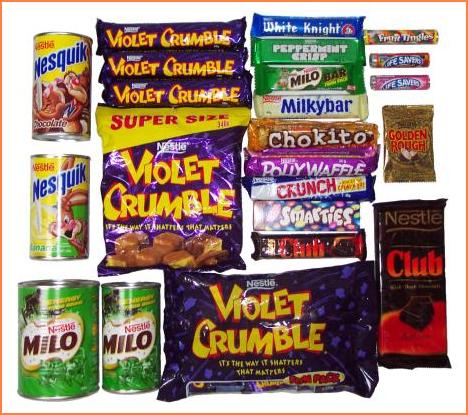
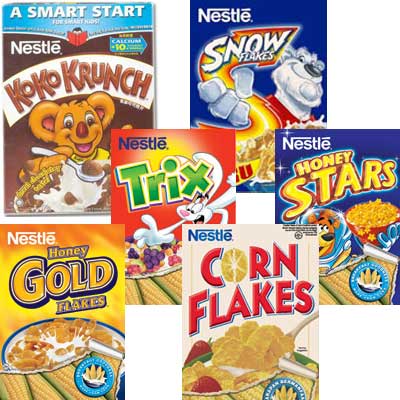
Nestlé has some 6,000 brands, with a wide range of products across a number of markets, including coffee (Nescafé, Nespresso, etc.), bottled water (Buxton, Perrier, etc.), milkshakes and other beverages (Nesquik, Milo, Carnation, etc.), chocolate (Milky Bar, After Eight, and many others), ice cream (Häagen-Dazs, Skinny Cow, etc.), breakfast cereals (Cheerios, Golden Nuggets, Shreddies, etc.), infant foods (now including Gerber products), performance and healthcare nutrition (Nesvita, PowerBar, etc.), seasonings, soups and sauces (Maggi, Buitoni, etc.), frozen and refrigerated foods (Findus, Lean Cuisine, etc.), confectionery (Rowntree products, Caramac, Wonka products, etc.), and pet food (Winalot, Felix).
A brief introduction of how the business started.

In September 1867 in Vevey Henri Nestlé developed a milk-based baby food, and soon began marketing it. The following year saw Daniel Peter begin seven years of work perfecting his invention, the milk chocolate manufacturing process. Nestlé's was the crucial cooperation that Peter needed to solve the problem of removing all the water from the milk added to his chocolate and thus preventing the product from developing mildew. Henri Nestlé retired in 1875 but the company under new ownership retained his name as Farine Lactée Henri Nestlé.In 1877 Anglo-Swiss added milk-based baby foods to their products and in the following year the Nestlé Company added condensed milk so that the firms became direct and fierce rivals.In 1905 the companies merged to become the Nestlé and Anglo-Swiss Condensed Milk Company, retaining that name until 1947 .
Controversy and criticism
  • Marketing of formula
One of the most prominent controversies involving Nestlé concerns the promotion of the use of infant formula to mothers across the world, including developing countries – an issue that attracted significant attention in 1977 as a result of the Nestlé boycott, which is still on going.
  • Ethiopian debt
In 2002, Nestlé demanded that the nation of Ethiopia repay $6 million of debt to the company. Ethiopia was suffering a severe famine at the time. Nestlé backed down from its demand after more than 8,500 people complained via e-mail to the company about its treatment of the Ethiopian government.
  • Melamine in Chinese milk
In late September 2008, the Hong Kong government claimed to have found melamine in a Chinese-made Nestlé milk product. The Dairy Farm milk was made by Nestlé's division in the Chinese coastal city Qingdao.
  • Greenwashing
A coalition of environmental groups filed a complaint against Nestlé to the Canadian Code of Advertising Standards after Nestlé took out full-page advertisements in October 2008 claiming that "Most water bottles avoid landfill sites and are recycled", "Nestlé Pure Life is a healthy, eco-friendly choice" and that "Bottled water is the most environmentally responsible consumer product in the world".
  • Child labour
The 2010 documentary The Dark Side of Chocolate alleges that Nestlé purchases cocoa beans from Ivory Coast plantations that use child slave labour. The children are usually 12 to 15 years old, and some are trafficked from nearby countries. In September 2001, Bradley Alford, Chairman and CEO of Nestlé USA, signed the Harkin-Engel Protocol (commonly called the Cocoa Protocol), an international agreement aimed at ending child labour in the production of cocoa.
Business Strategies
  • Joint ventures
Nestlé holds 26.4% of the shares of L'Oréal, the world's largest company in cosmetics and beauty. The Laboratoires Inneov is a joint venture in nutritional cosmetics between Nestlé and L'Oréal, while Galderma is a joint venture in dermatology with L'Oréal. Others joint ventures include Cereal Partners Worldwide with General MillsBeverage Partners Worldwide with Coca-Cola, and Dairy Partners Americas with Fonterra.
  • Ethical and sustainable efforts
Nestlé is a founding participant in the International Cocoa Initiative (ICI), an independent foundation set up in 2002 and dedicated to ending child and forced labour in cocoa growing, and eliminating child trafficking and abusive labour practices. However, there is little evidence that Nestlé has reduced any of its child labour practices in countries such as the Ivory Coast.
In October 2009, Nestlé announced its Cocoa Plan. The company will invest CHF 110 million over ten years to achieve a sustainable cocoa supply. On 23 October 2009, Nestlé and CNRA (the Ivorian National Centre for Plant Science Research), signed a frame agreement for cooperation in plant science and propagation, with a target of producing 1 million high-quality, disease-resistant cocoa plantlets a year by 2012. The aim is to replace old, less productive trees with healthier new ones.

StarBucks

Starbucks Recognition

One of the “100 Best Corporate Citizens”
Corporate Responsibility Officer/Business Ethics – 
2000-2009

One of the “World’s Most Ethical Companies”
Ethisphere – 2007-2009

“#1 Best Coffee in the Fast Food and Quick 
Refreshment categories and #1 Most Popular 
Quick Refreshment Chain” 
Zagat Survey – 2009

One of “The 100 Best Companies to Work For”
FORTUNE – 1998–2000, 2002–2009

One of the “Most Admired Companies in 
America”
FORTUNE – 2003–2009 

One of the “Best Places to Work for LGBT 
Equality”
The Human Rights Campaign – 2009

Component of the Dow Jones Sustainability World 
Indexes
1999, 2001–2008

Among the “100 Best Global Brands”
BusinessWeek – 2001-2008

One of the “Top 50 of the S&P 500”
BusinessWeek – 2004-2009 

Howard Schultz awarded “First Magazine Award 
for Responsible Capitalism”
First Magazine – 2007

One of “World’s Most Respected Companies” 
Financial Times – 2005-2006

Howard Schultz recognized as one of “America’s 
Best Leaders”
U.S. News & World Report – 2005

Market Strategy

Some of the methods Starbucks has used to expand and maintain their dominant market position, including buying out competitors' leases, intentionally operating at a loss, and clustering several locations in a small geographical area (i.e., saturating the market), have been labeled anti-competitive by critics. For example, Starbucks fueled its initial expansion into the UK market with a buyout of Seattle Coffee Company, but then used its capital and influence to obtain prime locations, some of which operated at a financial loss. Critics claimed this was an unfair attempt to drive out small, independent competitors, who could not afford to pay inflated prices for premium real estate. In the 2000s, Starbucks greatly increased its "licensed store" system, which permits Starbucks licenses only if they contribute to less than 20% of the licensee's gross income, are inside other stores or in limited or restricted access spaces, as to not dilute the brand image. License agreements are rare in volume and usually only made with Fortune 1000 or similar sized chain stores. The licensed store system can create the illusion of 2 or more Starbucks cafes in the same shopping plaza, when one is a standalone company owned, and the others are licensed. The menus of licensed stores can be the same or trimmed or modified versions of the cafes, or be positioned as independent cafes that happen to sell Starbucks products


Starbuck's Start Off

The first Starbucks was in Seattle, Washington, on March 30, 1971 by three partners: English teacher Jerry Baldwin, history teacher Zev Siegl, and writer Gordon Bowker. The three were inspired by entrepreneur Alfred Peet(whom they knew personally) to sell high-quality coffee beans and equipment. The name is taken from Moby-Dick; after Pequod was rejected by one of the co-founders, the company was named after the chief mate on thePequod, Starbuck.
From 1971–1976, the first Starbucks was at 2000 Western Avenue; it then was relocated to 1912 Pike Place, where it remains to this day. During their first year of operation, they purchased green coffee beans from Peet's, then began buying directly from growers.

The Starbucks CenterSeattle. The company HQ, in the old Sears, Roebuck and Co. catalog distribution center building
Entrepreneur Howard Schultz joined the company in 1982 as Director of Retail Operations and Marketing, and after a trip to Milan, advised that the company should sell coffee and espresso drinks as well as beans. Seattle had become home to a thriving countercultural coffeehouse scene since the opening of the Last Exit on Brooklyn in 1967, the owners rejected this idea, believing that getting into the beverage business would distract the company from its primary focus. To them, coffee was something to be prepared in the home, but they did give away free samples of pre-made drinks. Certain that there was money to be made selling pre-made drinks, Schultz started the Il Giornale coffee bar chain in April 1986.

Sale and expansion

In 1984, the original owners of Starbucks, led by Jerry Baldwin, took the opportunity to purchase Peet's (Baldwin still works there). In 1987, they sold the Starbucks chain to Schultz's Il Giornale, which rebranded the Il Giornale outlets as Starbucks and quickly began to expand. Starbucks opened its first locations outside Seattle at Waterfront Station in Vancouver, British Columbia, and Chicago, Illinois, that same year. At the time of its initial public offering on the stock market in 1992, Starbucks had grown to 165 outlets.


International expansion

Currently Starbucks is present in more than 55 countries.

How Starbucks Got's It's Name

The company is named in part after StarbuckCaptain Ahab's first mate in the novel Moby-Dick, as well as a turn-of-the-century mining camp (Starbo or Storbo) on Mount Rainier. According to Howard Schultz's book Pour Your Heart Into It: How Starbucks Built a Company One Cup at a Time, the name of the company was derived from Moby-Dick, although not in as direct a fashion as many assume. Gordon Bowker liked the name "Pequod" (the ship in the novel), but his then creative partner Terry Heckler responded, "No one's going to drink a cup of Pee-quod!" Heckler suggested "Starbo". Brainstorming with these two ideas resulted in the company being named after the Pequod's first mate, Starbuck


International names
Starbucks is known internationally by the following names:
  • Arabic-speaking countries: ستاربكس (transliteration: stārbaks)

  • Bulgaria: Старбъкс (transliteration: Starbâks)

  • China, Hong Kong, Macau, Taiwan: 星巴克 Pinyin: xīngbākè (星 xīng means "star", while 巴克 is a transliteration of "-bucks")

  • Israel: סטארבקס (transliteration: sṭārbaqs)

  • Japan: スターバックス (transliteration: sutābakkusu), and the abbreviation スタバ is also used in slang

  • Russia: Старбакс (transliteration: Starbaks)

  • South Korea: 스타벅스 (transliteration: seutabeokseu), but the Korean translation 별다방 (star-teahouse) is also used in slang

  • Quebec, Canada: Café Starbucks Coffee


Starbucks's Menu

Menu may vary from country to country and price also


Cup Sizes

NameMeasurementNotes
DemiUS fluid ounces (89 mL)Smallest size. Espresso shots.
ShortUS fluid ounces (240 mL)Smaller of the two original sizes
Tall12 US fl oz (350 mL)Larger of the two original sizes
Grande16 US fl oz (470 mL)Italian/Spanish/Portuguese/French for "large"
Venti20 US fl oz (590 mL), 26 US fl oz (770 mL)Italian for "twenty"
Trenta31 US fl oz (920 mL)Italian for "thirty"


Starbucks's Logo

Original brown logo, used from 1971–1987.


Green logo used from 1987-2010, still being used as a secondary logo.
Redesigned logo used from 2011-present.


Founder of Starbucks

Starbucks Coffee founders, from left, Zev Siegl, Jerry Baldwin and Gordon Bowker toast their success outside their store. Photo from Feb 1979
Jerry Baldwin

Baldwin learned the coffee trade from Alfred Peet, whose store Peet's Coffee & Tea was the inspiration for Starbucks. Starbucks purchased roasted coffee beans from Peet's during its first year of operation. In 1984 Peet's was put up for sale; Baldwin led a group of investors that purchased the company. In 1987 he sold his interests in Starbucks. Baldwin was Chairman of Peet's until 2001 when Peet's became a publicly traded company; he now holds the title of Director.
Baldwin has also served as director and founding chairman of Technical Standards Committee of the Specialty Coffee Association of America, president of Association Scientifique International du Cafe (ASIC), and chairman of Coffee Quality Institute. He was honored with the Lifetime Achievement Award by Specialty Coffee Association of America. He is a director of TechnoServe, a non-profit NGO working in Latin America and Africa


Zev Siegl
Zev Siegl is an American entrepreneur. In 1971 he, Jerry Baldwin, and Gordon Bowker founded the original Starbucks Coffee store, near Pike Place Market, in Seattle in the U.S. state of Washington. Siegel, a former history teacher, was the only paid employee in the early days of the company. In 1980 he sold his share of the business, which by then had expanded to four stores


Gordon Bowker
Gordon Bowker is an American entrepreneur. He began as a writer and went on to co-found Starbucks along with Jerry Baldwin and Zev Siegl. He was later a co-owner of Peet's Coffee & Tea and Redhook Ale Brewery. He attended the University of San Francisco.
He is credited with coming up with the name Starbucks, and changing the primary color of the logo from brown to green in 1987, a nod to his Alma Mater